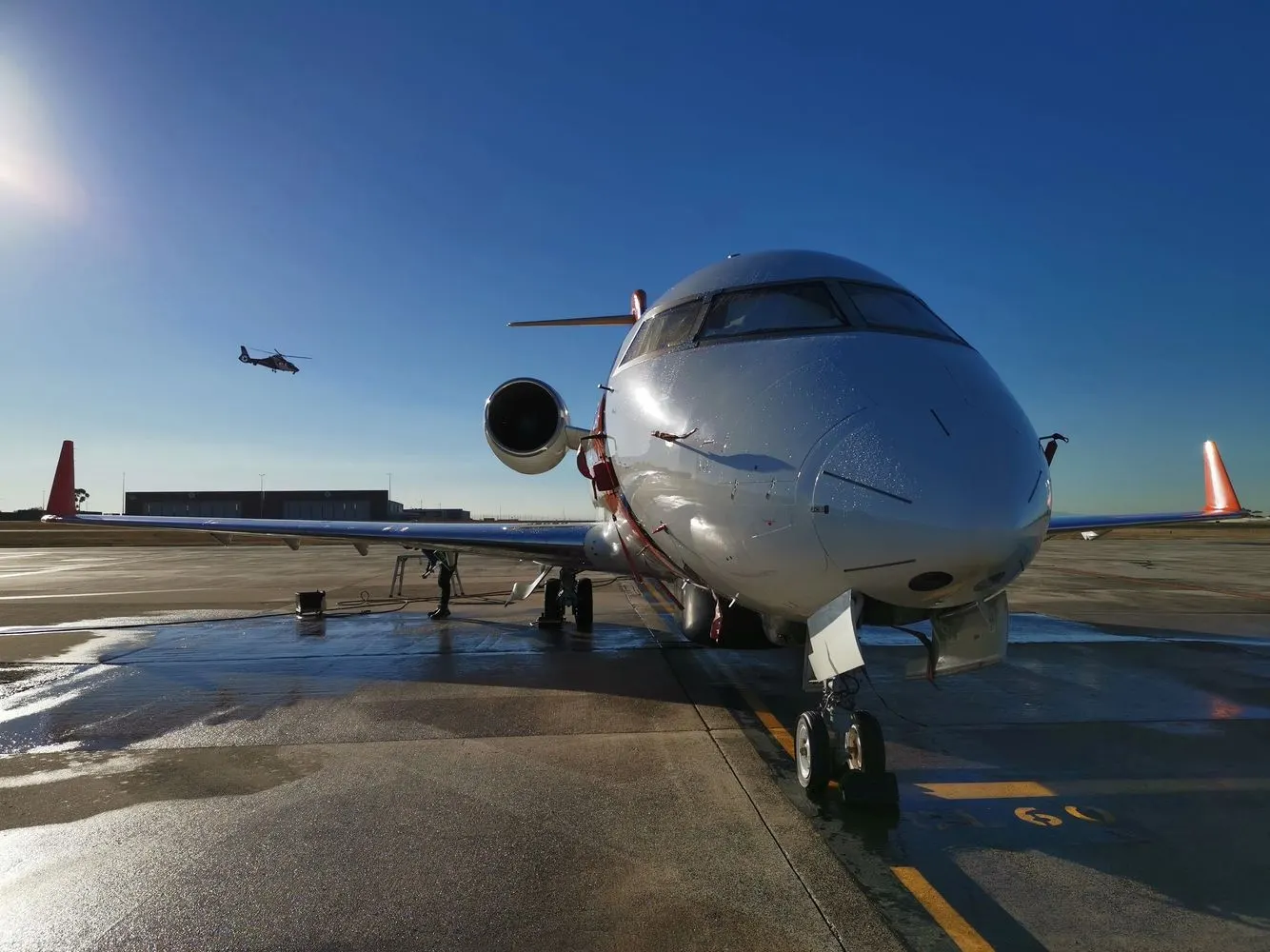
What a dry wash actually is
A dry or rinse-less wash uses an encapsulating product and disciplined towel technique to lift and trap contamination with little or no free water. Done correctly it produces a finish indistinguishable from a wet wash. Done badly — too little product, too few towels, too much pressure — it marrs paint, which is where the method got its poor reputation.
What a wet wash does better
Flowing water moves heavy contamination faster. On an airframe that has sat outside through a season, or one carrying significant belly and exhaust soil, a wet wash is genuinely more efficient and gentler than trying to encapsulate that volume of dirt.
Why the airport often decides
Wash-water runoff is an environmental compliance matter, not a preference. Some fields and some ramps restrict or prohibit open washing, and the handling requirements vary by location. A vendor who only offers wet washing will eventually tell you a job is impossible when the real answer was a different method.
Hangar work beats both
Most streaking and water spotting is caused by wind and sun drying product before it can be removed properly. Working inside a hangar removes both variables. If you have hangar access, use it — the finish will be measurably better regardless of method.
What to ask a vendor
Ask which method they are proposing and why. Ask how they protect static ports, probes and vents. Ask how they handle runoff at your specific field. If the answers are vague, that is your answer.