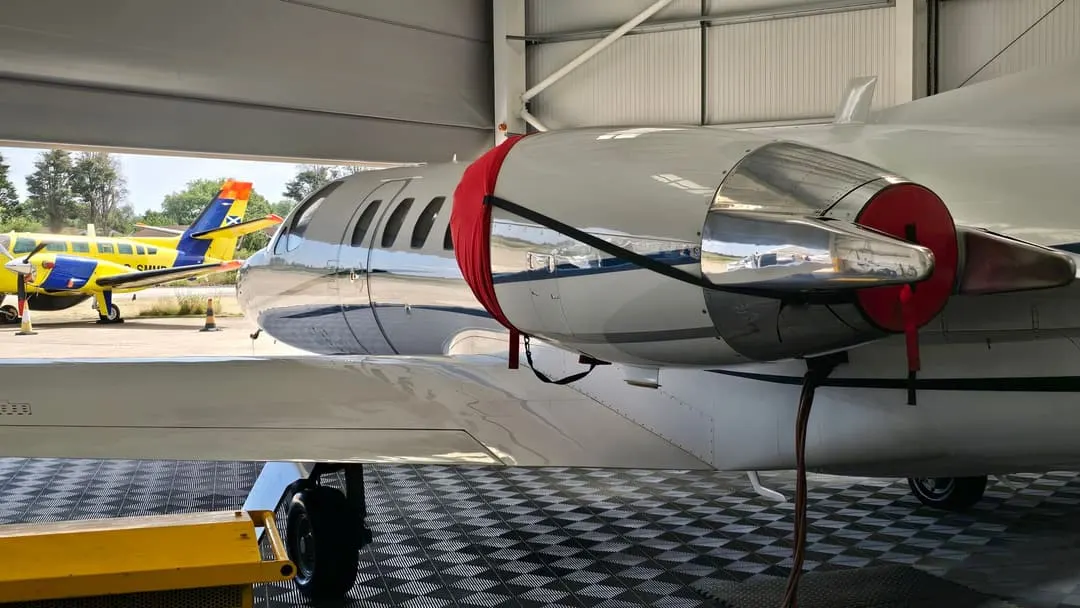
It is not dirt
Turbine exhaust deposits bond to the finish under heat. That is why a normal wash lifts the loose surface layer, looks better for a day, and then reveals the same shadow along the nacelle and aft fuselage. You are washing off the top of something that is chemically attached underneath.
What actually removes it
A dedicated stain treatment with appropriate dwell time, worked in stages rather than forced in one pass, followed by correction of the finish underneath where the deposit has already etched. It is slower than washing and it produces a result that lasts.
Why it comes back faster the second time
Once exhaust has etched the finish, the surface is microscopically rougher and holds the next round of deposits more readily. This is the argument for addressing it properly early rather than lightening it repeatedly for years.
Slowing the return
A protective coating or sealant across the affected area gives the next round of deposits far less to hold onto, and makes routine washing substantially more effective. On high-utilisation turboprops this is usually the difference between a manageable problem and a permanent one.
Be realistic about very old staining
Staining that has been left for years and etched deeply may not come back entirely. Any vendor who promises a complete return to new on a decade of neglect is guessing. We will tell you what to expect before starting.