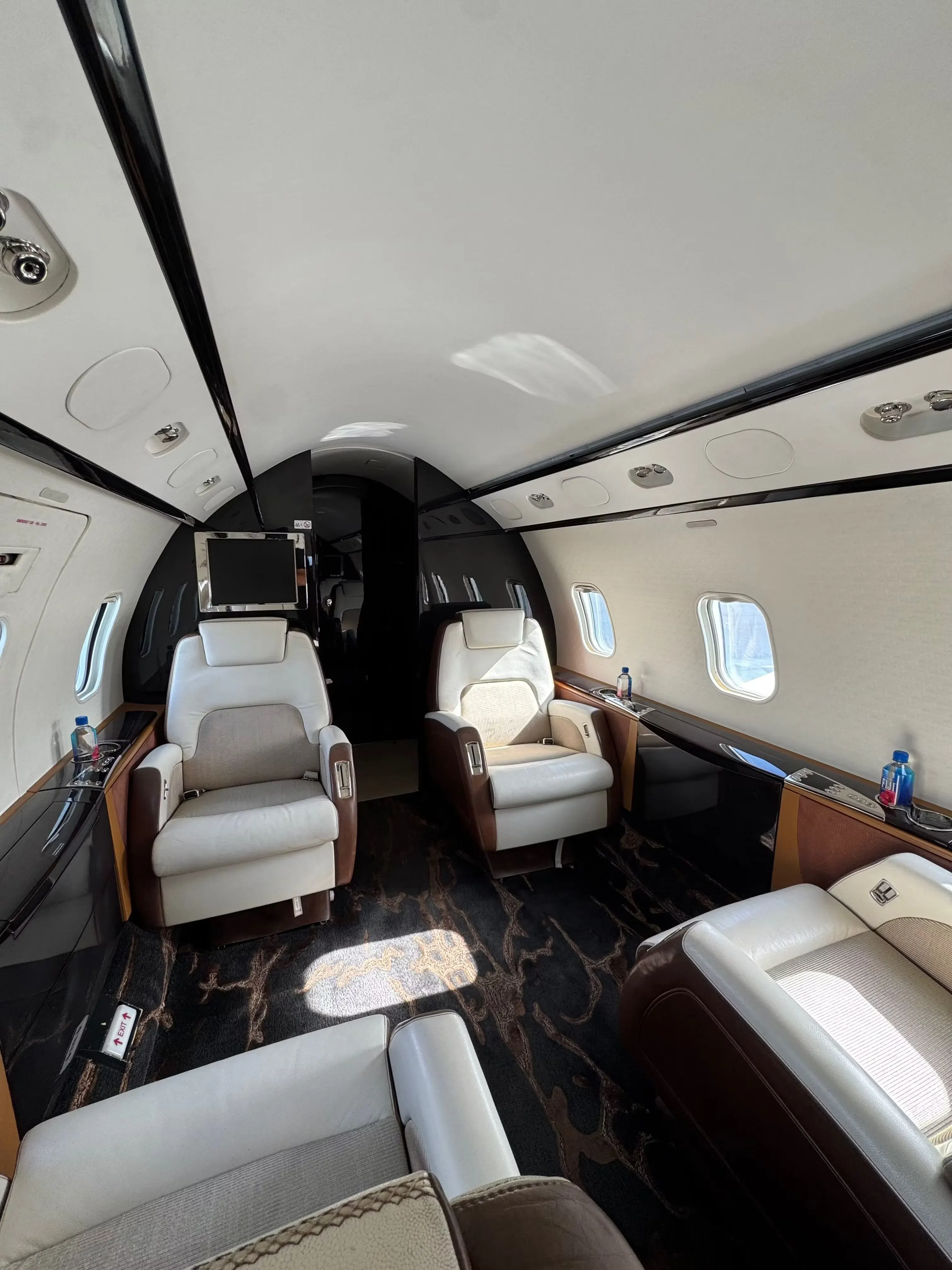
Leather conditioned until it stopped working
Aircraft leather does not need conditioning every visit. Repeated over-conditioning leaves a tacky surface film that attracts soil, transfers to clothing, and eventually has to be stripped back before the leather can be treated properly again. Cleaned and conditioned to its original sheen is the target. Glossy is a warning sign, not a result.
Veneer stripped of depth
Wood veneer in a cabin sits under a lacquer that varies by manufacturer and refurbishment history. Aggressive product or a polish intended for a different finish removes depth and clarity permanently. It looks brighter for a week and worse for years.
Carpet oversaturated
Extraction that puts down more moisture than it recovers drives soil into the underlay, and in an aircraft it introduces moisture where moisture should not be. Traffic patterns that reappear within days usually mean the previous extraction wicked soil back up rather than removing it.
Odour masked instead of removed
Fragrance and fogging do not remove an odour source. They cover it for a few days and then you are back where you started, with an additional smell layered on top. Odour has a source: a spill, catering, a biological event, or occasionally an environmental system or insulation issue that is a maintenance matter rather than a cleaning one. Finding out which is the entire job.
Paint corrected past what it could spare
Aircraft paint film is thinner than automotive paint, and there is a finite amount of material available. A vendor who treats an airframe like a car can produce a spectacular short-term result and leave you with paint that cannot be corrected again.
What good looks like
An honest assessment before anything is committed, chemistry matched to each material, and a vendor willing to tell you a surface should be left alone. Restraint is the skill.