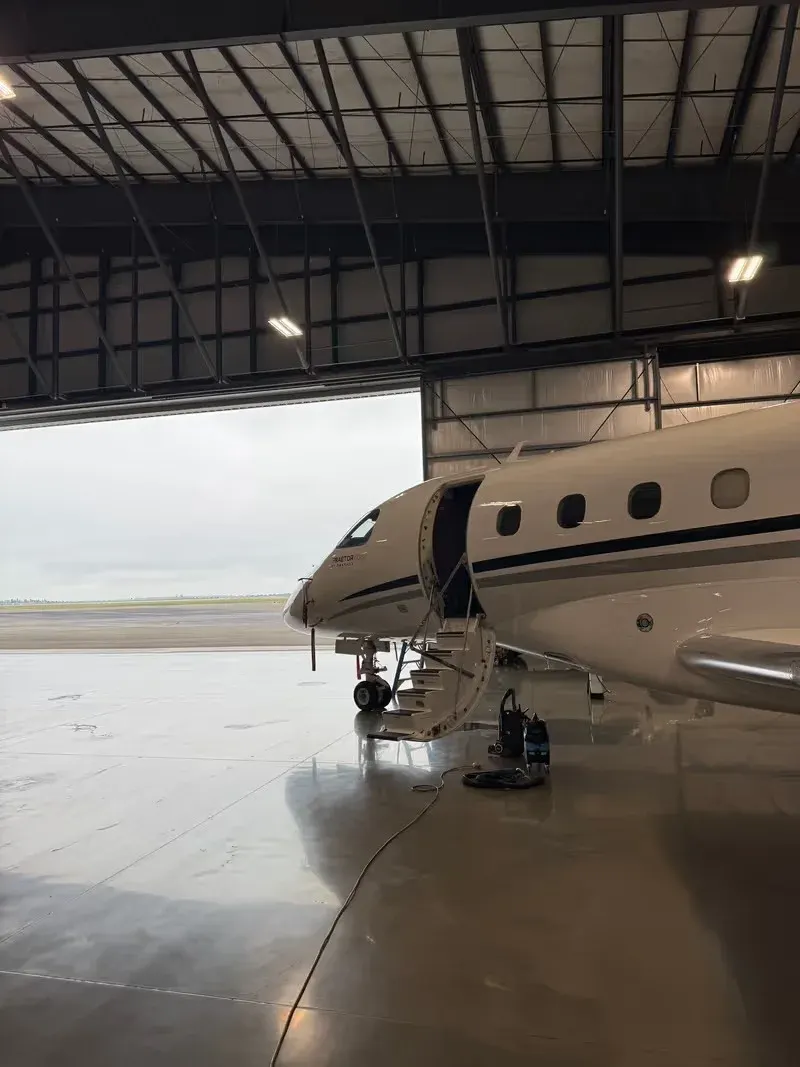
The belly is the tell
A casual clean stops where the eye stops. An inspector starts where it does not — belly, wheel wells, gear legs, door jambs and the aft fuselage. Those areas are read as a proxy for how the whole aircraft has been maintained, fairly or not. A spotless cabin above a neglected belly raises more questions than it answers.
Listing photography is unforgiving
Marketing photographs are shot close, lit hard and viewed at full resolution on a large screen. Swirl marks that are invisible on the ramp are obvious in a lit studio frame. Window haze that nobody notices in flight shows as a grey cast across every cabin shot.
Sequence matters
Detail before photography, not after. And detail after any maintenance event, not before — maintenance leaves fingerprints, adhesive residue and shop dust that will otherwise be in every image.
What not to do
Do not use presentation to disguise a defect. Filling and polishing over damage that will be found at pre-buy costs you credibility at exactly the moment you need it, and an inspector who catches one cosmetic cover-up starts looking much harder at everything else.
Delivery is its own moment
If the sale closes, the handover is worth preparing for separately. A buyer who has just committed a significant sum forms a lasting impression in the first thirty seconds at the aircraft.